



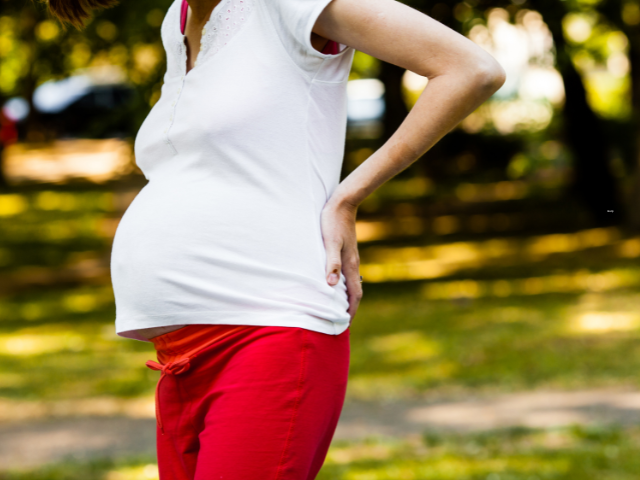
Pelvic girdle pain in pregnancy is common. If you’ve developed aching, sharp, or grinding pain around your pelvis, lower back, or groin, you’re far from alone. It’s not something you need to just put up with.
What Is Pelvic Girdle Pain?
Pelvic girdle pain in pregnancy (PGP) is pain felt around the joints of the pelvis – most commonly the sacroiliac joints at the back, and the pubic symphysis at the front. It can show up as an ache, a sharp catch, or a grinding sensation, and may radiate into the lower back, groin, or thighs. Pain is often worse with walking, standing for long periods, climbing stairs, getting in and out of the car, or rolling over in bed.
PGP is common. It affects around 44% of pregnant women at some point, with prevalence increasing as pregnancy progresses, from roughly 38% at 24 weeks to nearly 48% by 38 weeks. For some women it’s a mild nuisance. For others it’s genuinely disabling, affecting work, sleep, and the ability to care for other children.
Many women describe feeling blindsided by PGP. No one warned them it might happen, and the sudden shift in what their body can do can feel disorienting. It’s also common to downplay the pain to avoid seeming ungrateful for a healthy pregnancy, especially around others who may be facing fertility struggles. If this resonates, please know: PGP is a recognised, treatable condition.
What Causes Pelvic Girdle Pain in Pregnancy?
The honest answer is that researchers don’t have one single cause pinned down. PGP is generally understood to result from a combination of hormonal, mechanical, and muscle-control changes rather than any one factor acting alone.
Busting the relaxin myth
You may have read that the hormone relaxin is responsible for pregnancy pelvic pain, since it’s known to loosen ligaments in preparation for birth. However, this isn’t well supported by the evidence. Multiple studies comparing relaxin levels in women with and without PGP have found no meaningful difference between the two groups, and reviews pulling this research together rate the evidence for a relaxin-PGP link as low.
The hormone more consistently linked to pelvic joint laxity is actually estrogen. Estrogen appears to shift the balance of collagen in ligaments. It reduces the type that resists stretch (Type I) while increasing the more elastic type (Type III) – which loosens the joints. Interestingly, relaxin seems to partially offset this shift rather than drive it. So the old “blame relaxin” story has it backwards.
It’s about load too, not just hormones
Alongside hormonal changes, your growing uterus shifts your centre of gravity. This increases the load through your spine and pelvis, and changes how your muscles activate to keep you stable. Some research even suggests certain muscles – like the deep abdominals – can become overactive rather than weak in people with PGP. This is part of why a one-size-fits-all ‘core strengthening’ approach doesn’t always help.
Who Is More Likely to Get It?
Some factors make PGP more likely, though having one or more doesn’t mean it’s inevitable:
- A family history of low back pain or PGP – the strongest known risk factor
- A previous pregnancy with PGP, or a history of low back pain generally
- Already having a child at home
- Being overweight, or not having exercised regularly before pregnancy
- Physically demanding work, or a history of back or pelvic trauma
- Higher stress, anxiety, or low mood
Of everything researchers have looked at, longer duration of standing is the one clearly modifiable factor. This is worth keeping in mind if your day involves a lot of time on your feet.
Is This Just Something to Get Through?
No. PGP is common, but common doesn’t mean untreatable. A physiotherapist experienced in pelvic health can assess how your pelvis is moving and loading, and build a plan around your daily life. They won’t just hand you a generic exercise sheet. Many women say simply being properly examined and taken seriously, even before treatment starts working, makes a real difference to how manageable the pain feels.
Frequently Asked Questions
Is pelvic girdle pain in pregnancy the same as sciatica?
No. Sciatica involves nerve pain that typically radiates down the back of the leg, often below the knee. PGP is joint and muscle-related pain centred around the pelvis, though it can sometimes radiate into the buttock or thigh. If you have pain, numbness, or tingling running down your leg, mention this to your physiotherapist. It points to a different mechanism and may need a different approach.
Will pelvic girdle pain go away after I give birth?
For most women, PGP improves significantly in the weeks after birth as hormone levels settle and load through the pelvis changes again. Some women do have symptoms that persist longer. This is worth assessing rather than assuming it will simply resolve on its own, particularly if pain is still significant at six weeks postpartum.
Can I still exercise if I have pelvic girdle pain?
Generally, yes – and staying appropriately active is usually part of the treatment, not something to avoid. Research shows exercise doesn’t necessarily prevent PGP starting, but it does reduce how severe symptoms are once they’re present. The key is adjusting technique and load with guidance rather than pushing through pain or stopping altogether.
When should I see someone about it?
Any time pelvic or lower back pain is affecting your daily activities, sleep, or mood is worth an assessment. Earlier tends to be easier to manage than later. You don’t need to wait until it becomes severe.
Living with pelvic girdle pain? Our physiotherapists can assess what’s driving your symptoms and build a plan around your daily life. Book an appointment with our team today.
Also in This Series
Managing and Treating Pelvic Girdle Pain – practical strategies, exercise, and support options that actually help.
Posture & Back Care With a Newborn – protecting your back once baby arrives.
Further Information
RCOG have other helpful information on pregnancy related pelvic pain.
