



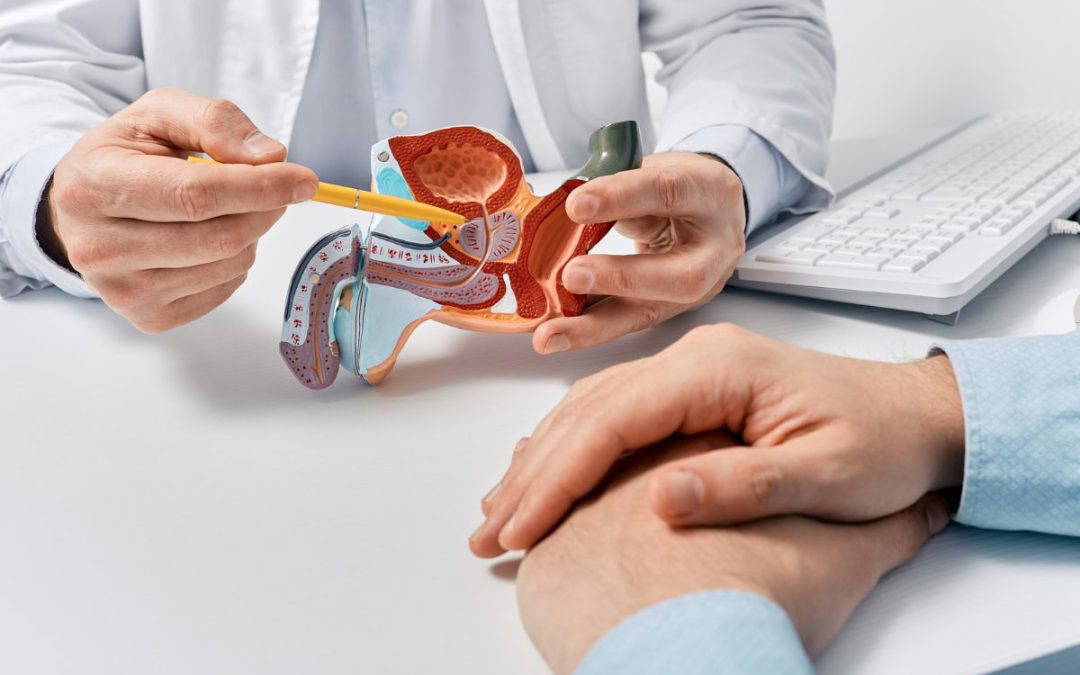
If you are having your prostate removed (a radical prostatectomy), doing pelvic floor exercises before prostate surgery may make your recovery easier, because it gets your pelvic floor muscles working well.
This is the second post in our Movember series. Here we focus on preparing for surgery, and how to manage the first few months afterwards. Our overview of physiotherapy after prostate cancer surgery covers recovery in more detail, and post 1 explains how prostate cancer is diagnosed and treated.
Why surgery affects bladder control and erections
The prostate wraps around the urethra, the tube you wee through, just below the bladder. Removing the prostate disturbs some of the mechanisms that keep you dry, so the pelvic floor muscles have to do more of the work. The nerves that help with erections also run close to the prostate, and surgery can affect them.
Leakage is common after surgery, especially in the first weeks. It tends to happen with coughing, sneezing, lifting or getting up from a chair. Most men improve steadily over the first six to twelve months, and some keep improving into the second.
Do pelvic floor exercises before prostate surgery make a difference?
Research suggests they can, although results are not the same in every study. A 2023 review that pooled results from many trials found that men who trained their pelvic floor before surgery were less likely to be leaking three months afterwards. Another study found that a programme started before surgery improved pelvic floor muscle function, reduced leakage and improved quality of life afterwards.
The benefit seems to show mainly in the early months. That means a quicker return to dryness for many men, not a guarantee that you will not leak.
Preparing also means you already know how to find and use the right muscles when you need them. They are inside the body and hard to identify on your own, and many men squeeze the wrong muscles at first.
If you have 4 to 6 weeks before surgery, that is a great time to get started on pelvic floor exercises. If your date is closer than that, it’s still worthwhile. Even a couple of weeks and one or two sessions with a physiotherapist is helpful.
Getting started with pelvic floor exercises before prostate surgery
Book with a pelvic health physiotherapist as soon as you have a surgery date. At your first appointment we will:
- check how your pelvic floor works, including whether you can relax it as well as squeeze it
- teach you the right technique, using biofeedback if it helps
- set up a home programme that suits you
- talk through what to expect after surgery, including bladder and bowel habits
- advise on staying active before and after your operation
How to do a pelvic floor contraction
Imagine you are trying to stop yourself passing urine, or lifting the testicle. You should feel a gentle lift and squeeze at the base of the penis and behind the scrotum. A light tightening low in the tummy is fine. Breathe normally, and try not to squeeze your buttocks or thighs or hold your breath.
A typical starting programme
Your physiotherapist will tailor this to you.
- Slow holds: squeeze and lift, hold for up to 5 seconds (building towards 10), then relax fully for the same length of time. Repeat up to 10 times.
- Quick squeezes: squeeze and let go quickly, up to 10 times.
- Do both 2 to 3 times a day, lying, sitting or standing.
- The knack: squeeze and lift just before you cough, sneeze, lift or stand up. This is a simple way to put the exercises to use in daily life.
Two more things help. Keep your bowels moving, because constipation and straining put extra load on the pelvic floor. Eat plenty of fibre, drink enough fluid, and use a small footstool so your knees sit above your hips when having a bowel motion. And stay active: walking and regular exercise help you recover from an operation.
After surgery: what to expect
Catheter. You will usually go home with a catheter for one to two weeks, depending on how your surgery goes.
Restarting exercises. You can restart pelvic floor muscle exercises once the catheter is out.
Leakage. Expect some leakage once the catheter comes out. It is often worse when you are tired, later in the day, and with coughing, sneezing, lifting or getting up. We can give you advice on what type of pads to use. Drink normally rather than cutting back on fluids, and cut back on caffeine and alcohol if your bladder is irritable. Go to the toilet when you need to rather than “just in case” all day.
Lifting and exercise. Avoid lifting and straining until your surgeon says it is safe, usually at lease six weeks. Walking is encouraged. We will help you return gradually and safely to your normal activities – e.g. the gym, cycling, or running.
Erections. Erections take time to return, and recovery can continue for a year or two. Talk to your urologist about medications. We can advise on devices such as vacuum pumps, and other ways to help with sexual satisfaction.
How you feel. It is normal to feel frustrated or embarrassed. Many men find it helps to talk to others who have been through it. You can read about the experience of one of our patients in Talking about prostate cancer matters.
When to get help
If possible see us a few weeks before your surgery, otherwise come in once the catheter has been removed. We can help with ensuring you are using the right muscles, and give you advice on lifestyle modifications to help reduce leakage with movement. Contact your surgeon or GP promptly if you have a fever, heavy bleeding or clots, cannot pass urine, or have severe pain or a swollen, painful calf.
Frequently asked questions
Is it too late to start pelvic floor exercises before prostate surgery if my surgery is next week?
No. Even a few days of learning the right technique helps. See a physiotherapist as soon as you can, and keep practising after surgery once the catheter is removed.
Will I definitely leak after prostate surgery?
Not everyone does, but most men have some leakage, especially in the first weeks. Most improve over the first 3-6 months. Pelvic floor training helps to speed this up.
How long until I am dry?
It varies. Most men see steady improvement over the first 3 to 6 months, and some continue to improve beyond that. If you are still leaking after a few months, and have not seen a physiotherapist, book an appointment.
Do pelvic floor exercises help erections?
They may. Changes to nerve function are the main cause of erection issues after prostate surgery, but the pelvic floor muscles do help keep blood in the penis during an erection. Strong, well-coordinated muscles can help. It is one part of a wider plan that your urologist and physiotherapist can put together with you.
Do I need a referral to see a pelvic health physiotherapist?
No. You can book with us directly.
Having prostate surgery?
Book a pre-surgery appointment and we will teach you the right technique, set up your home programme and give you advice about what to expect after the operation. You do not need a referral. Book an appointment.
Also in this series
- Post 1: Prostate Cancer: How It’s Diagnosed and Your Treatment Options
- Post 3: Prostate Radiotherapy Side Effects: Bladder, Bowel and Pelvic Floor
