



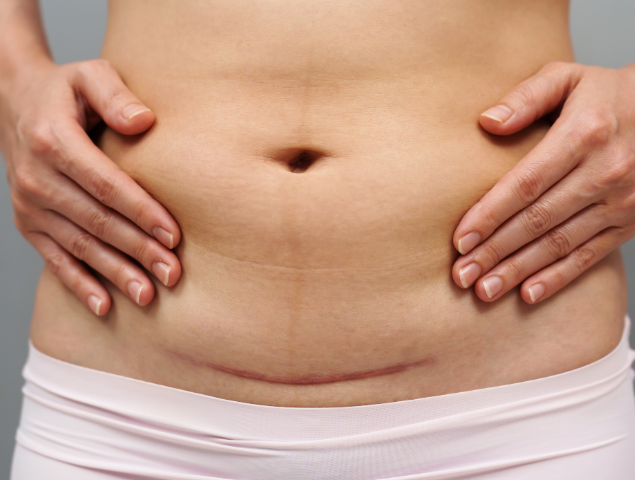
Your caesarean scar is more than a mark on the skin. It runs through several layers of tissue. How those layers heal can affect comfort, movement and even pelvic floor symptoms for months or years afterwards. Caesarean scar massage and desensitisation are two simple, well-supported ways to help that tissue settle, but timing and technique matter.
Why scar care matters
- A caesarean incision passes through skin, fascia and muscle. As it heals, scar tissue fibres can form in a disorganised pattern and stick to the layers underneath. So the tissues don’t glide easily.
- This can show up as pulling or tightness with certain movements, a numb or overly sensitive patch of skin, or discomfort with clothing or exercise.
- Gentle massage helps improve tissue mobility and blood flow. Desensitisation retrains the nerves around the scar that have been temporarily disrupted by surgery.
When to start Caesarean scar massage
- Wait until your wound is fully closed, dry, and free of scabs or signs of infection. For most women this is around six to eight weeks, but it can take longer if healing has been more complicated.
- If in doubt, check with your GP, midwife or pelvic health physiotherapist before you begin. Starting too soon risks reopening or irritating the wound.
- It’s genuinely never too late to start Caesarean scar massage. Many women begin scar work months or even years after their caesarean and still notice real improvements in comfort and mobility.
Start with desensitisation
If your scar is tender, numb, or you find it hard to tolerate touch, desensitisation is the gentler starting point before massage proper:
- Begin with very light contact. A soft cloth, cotton ball, or your fingertips – held near or on the scar without moving.
- Gradually introduce different textures and pressures as tolerated. Soft fabric, then firmer touch, then gentle tapping or brushing.
- Little and often works well. A minute or two, once or twice a day, is enough to begin retraining the area.
- It’s normal for this to feel strange or emotionally confronting at first. Go at your own pace.
Progressing to scar massage
- At around 6-8 weeks postnatal, you could start with gentle circular movements. Do this above and below the scar. Slowly build up to work on the scar itself.
- Up and down, side to side movements directly on the scar can begin at around 10-12 weeks. Try resting a finger on the scar and gently gliding the skin in each direction, working along the full length of the scar in small sections.
- Pinch and roll techniques are usually safe to do after 12 weeks. Gently lift and roll the tissue between your fingers, as long as direct pressure is comfortable.
- A small amount of oil or a scar-specific product can help your fingers glide smoothly – choose something you’re not sensitive to.
- Some pulling or mild discomfort is expected as you start, but it should not be painful. If it’s sharp or lingers, ease off and try again another day.
When to pause or get help for Caesarean scar massage
See your GP, midwife or pelvic health physiotherapist if:
- Your scar is open, weeping, bleeding, or showing signs of infection (increasing redness, warmth, odour or fever)
- Pain is sharp, worsening, or not settling with gentler techniques
- You notice a lump, significant thickening, or a scar that seems to be pulling your posture or movement out of shape
- Scar discomfort is linked with ongoing bladder, bowel or prolapse symptoms
A pelvic health physiotherapist can assess the scar directly and tailor clinic treatment and a home programme for you.
How soon after a Caesarean can I start scar massage?
Most women can begin once the wound is fully closed and free of scabs, typically around six to eight weeks. If healing has been more complicated, check with your GP or physiotherapist first.
Is it too late to start scar massage if my Caesarean was years ago?
No it is never too late! Scar tissue continues to respond to massage and desensitisation well beyond the early postnatal period. Many women notice improved comfort and mobility even when starting months or even years later.
What if my scar is numb rather than painful?
Numbness is common and reflects the nerve disruption that happens with the incision. Desensitisation techniques – gradually reintroducing different textures and pressures – can help restore normal sensation over time.
Can scar tissue affect my pelvic floor or back?
Restricted, adhered scar tissue can affect the mobility and coordination of the surrounding abdominal wall and pelvic floor. Sometimes this contributes to pain or bladder and bowel symptoms. A physiotherapy assessment can help work out whether your scar is playing a role.
Ready to get your scar assessed?
Book an assessment with our team for hands-on scar treatment and a home programme tailored to how your caesarean has healed.
Also in this series
Core and pelvic floor rehab after a caesarean
Further Information
Find out more about scar healing and recovery
